
Custom Chenille Patches Los Angeles
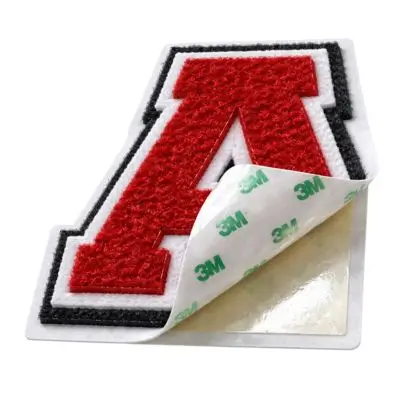
Run your hand over it. That’s the “Moss Stitch.” It feels like a rug because that’s basically what it is, loops of wool-acrylic yarn standing straight up.
- Most people call these “Letterman patches.” But in the current Los Angeles fashion landscape, At Los Angeles patch factory, we aren’t just making them for the varsity quarterback.
- We’re running 12-inch back patches for streetwear brands in the Arts District and retro script logos for production companies in Burbank.
- If you want sharp, high-definition detail, go buy a Woven Patch. If you want something thick, fuzzy, and warm that screams “Heritage,” you want Chenille.
Trusted by Brands and Organizations Across California
Recent Projects
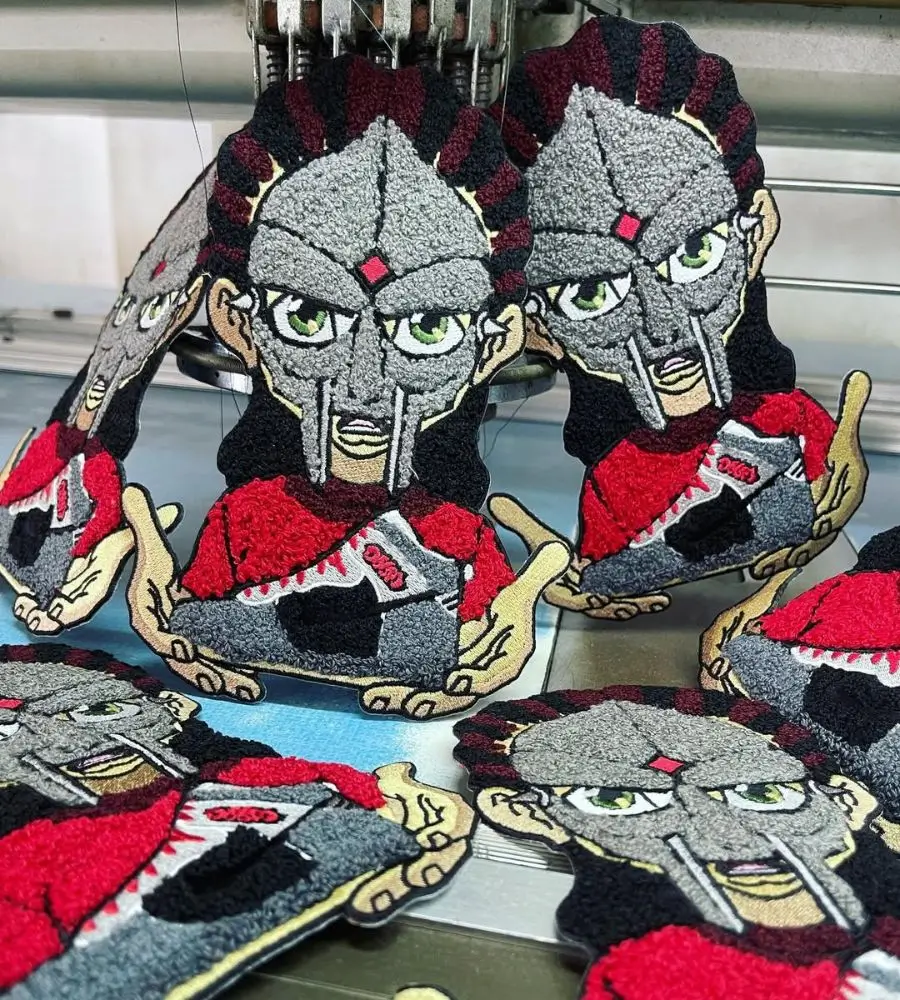
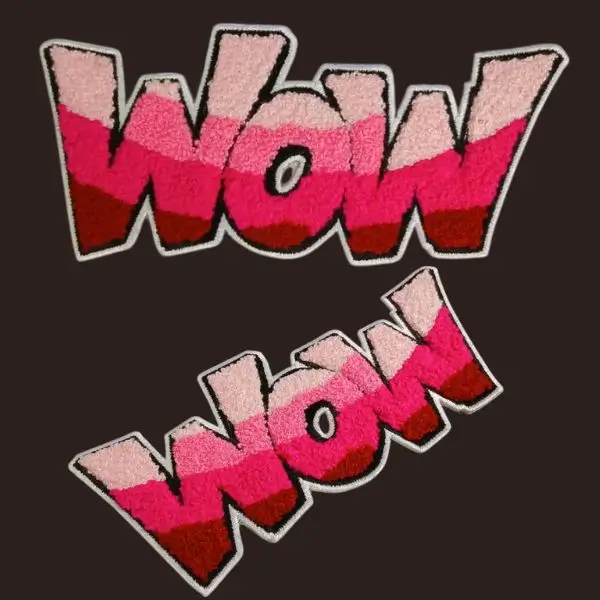
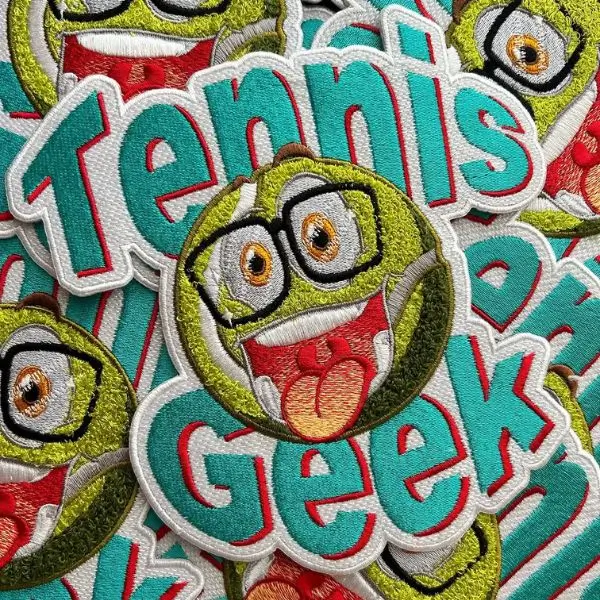
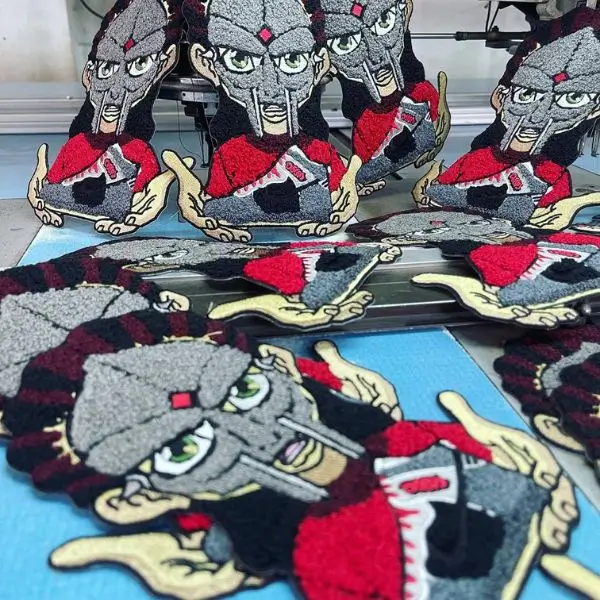
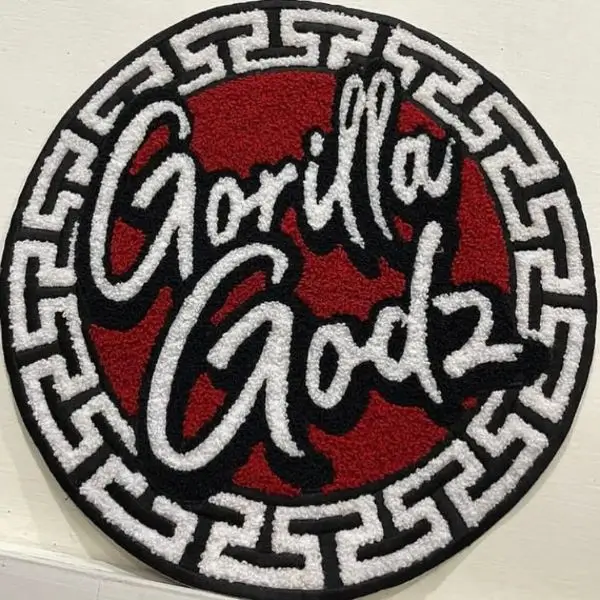
From neon-layered mascots to gritty streetwear branding, our latest Chenille runs are loud. Check out the depth on the ‘Tennis Geek’ character and the sharp detail on the ‘Gorilla Godz’ Greek-key border. This is how you take vintage texture and apply it to modern design.
The Classic “Letterman” Look for Jackets and Hoodies
It’s not just for high schools anymore. From DTLA streetwear drops to vintage-style branding, we create the authentic, fuzzy “moss-stitch” patches that define the look.
We manufacture these the old-school way. We punch the yarn through a stiff felt backing to create that high-pile texture you remember from the 90s. It’s heavy. It’s durable. It holds up.
Chenille vs. Standard Embroidery: Visual Difference
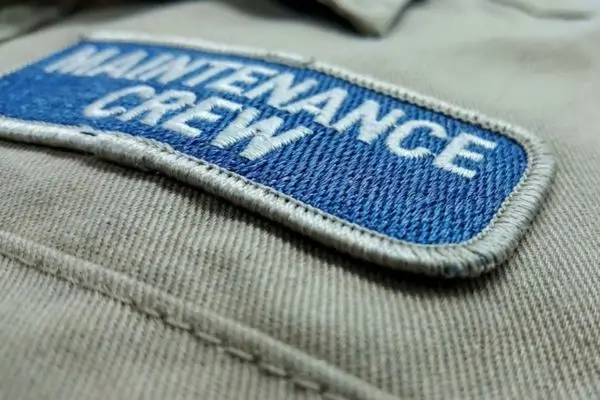
Standard Embroidery
- The Texture:
- Unlike the high-pile of yarn, custom embroidered patches use tight, flat stitching.
- The Vibe:
- Modern and technical. Best for small details viewed under a microscope.
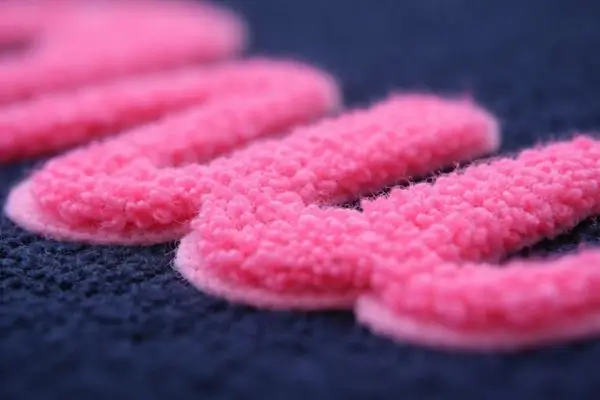
Chenille Patches
- The Texture:
- Stands up. Creates a ‘pile’ about a quarter-inch high. Softens edges.
- The Vibe:
- Retro, bold, and loud. Meant to be seen from the bleachers.
Customization: More Than Just Alphabet Letters
We don’t just have a box of pre-made “A” and “B” patches. We custom-manufacture your specific logo.
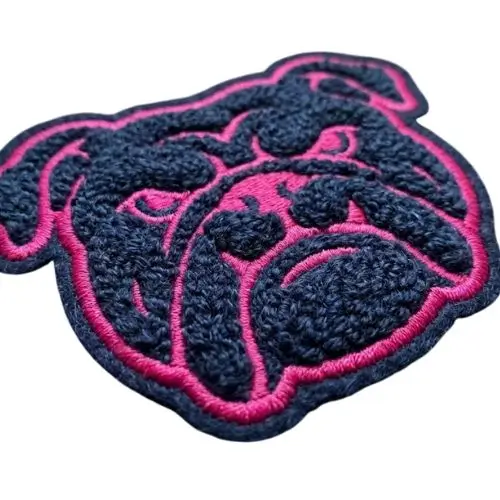
Custom Mascots & Script Logos
We turn brand names into flowing Chenille script. We can do simple mascots—bulldogs, tigers, fierce faces. We outline them in a thread to lock the shape in.
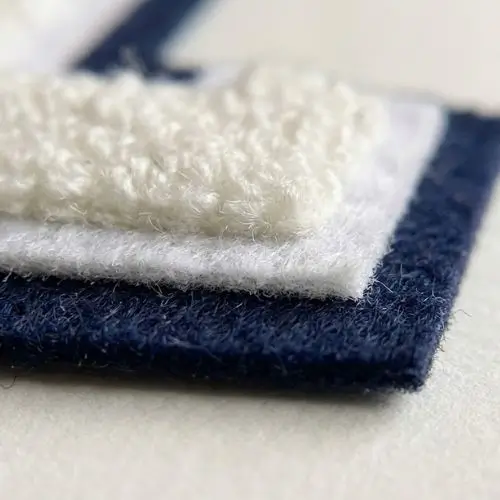
Felt Backing Options: Single vs. Double
Chenille needs a foundation. We stitch it onto stiff “Scrim Felt.”
- Single Felt: One layer of colored felt. Clean and simple.
- Double Felt: The industry standard. We staple two layers of contrasting felt together (e.g., Gold Chenille on a White top felt, on a Navy bottom felt). It creates a 3D border effect.
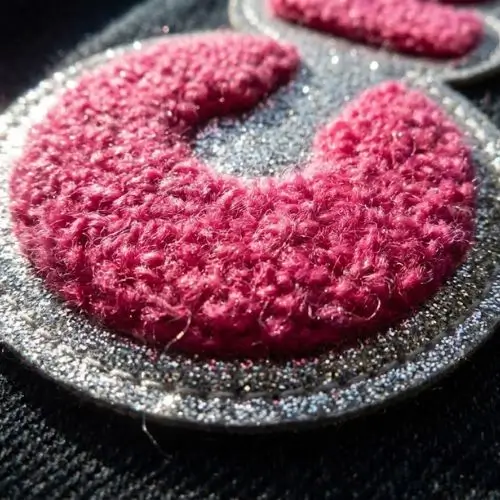
Gold & Silver Glitter Felt
Standard felt is matte. But this is Hollywood. If you want your border to pop under stage lights, we swap the top layer for Glitter Felt. It’s popular for fashion brands and dance teams.
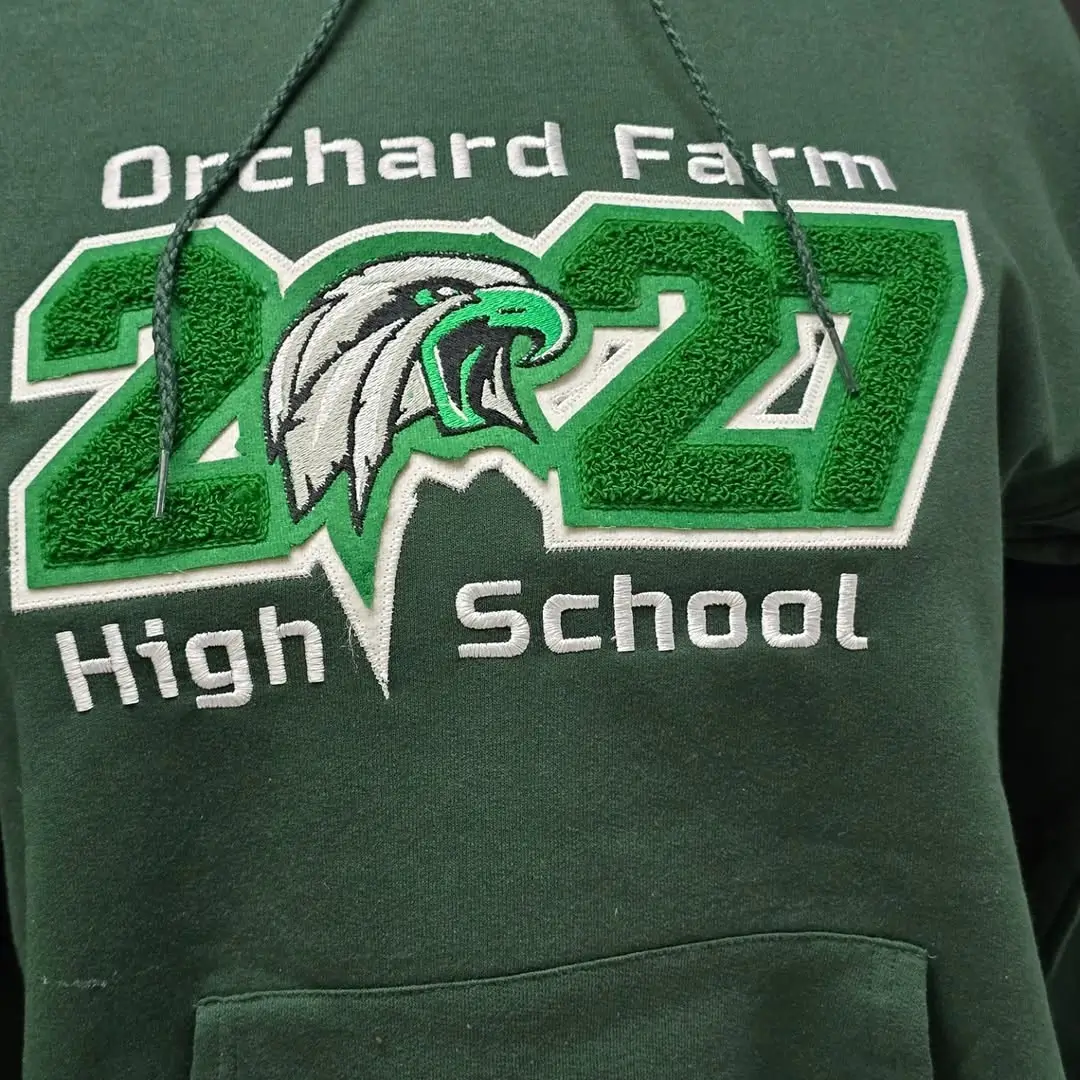
Hybrid Patches: Embroidery over Chenille
Need sharp text inside a fuzzy mascot? We mix media. We use flat embroidery for the fine details and high-pile chenille for the body. It’s the ultimate premium look.
Attachment Options (Heavy Duty)
Chenille patches are heavy. Physics is a factor here.
Sew-On (Recommended)
Heat Seal (Iron-On)
Adhesive (Sticker)
We Don’t Just Make Patches. We Build the Gear (Apparel Services).
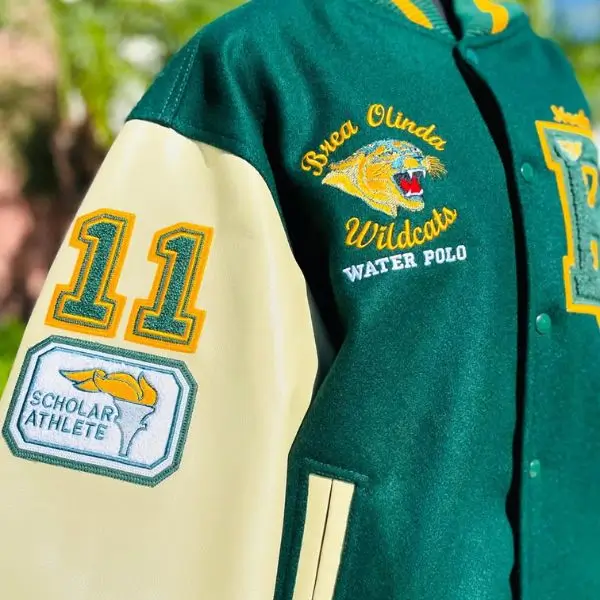
Don’t ruin a $50 patch on a cheap blank. We source premium heavyweight hoodies and authentic wool varsity jackets. We handle the heavy-duty industrial sewing right here in Los Angeles so the patch never sags.
Popular Applications in Los Angeles
Streetwear Hoodies (Oversized Chest Patches)
We’re seeing massive 10-inch text across the chest of heavyweight hoodies. Chenille adds value to the garment that ink can’t match.
High School & College Varsity Jackets
We handle the specs for schools across LAUSD and the San Gabriel Valley. We match the specific school colors (Pantone to Yarn conversion) so the seniors don’t complain.
Retro 90s Merch Drops
Vintage is cash right now. We help brands recreate that “1993 Sportswear” look with big, blocky, fuzzy logos.
What L.A. Business Owners Say
We don’t pay for reviews. We earn them on the embroidery floor. Scroll to see what local partners think of our work.
How Chenille Pricing Works
We don’t use flat rates. Price is driven by material consumption and machine time.
What Drives the Cost
-
Size & Pile Height
Larger patches consume more yarn. High-pile Chenille takes longer to stitch than flat thread.
-
Layer Count (Felt)
Double Felt costs more than Single Felt. It requires two separate cutting passes and manual assembly.
-
Mixed Media Complexity
Adding embroidery detail on top of Chenille requires a machine changeover, which adds time.
Bulk Savings Logic
Setting up a Chenille machine is manual work. We have to thread thick yarn spools and calibrate tension.
3-Step Order Process
-
1
Send Art or Font Style
Send your vector file. If you just need text, tell us the font and the word.
-
2
Approve Digitized Mock-up
We show you a digital proof of the felt layers and yarn colors.
-
3
Production & Ship
We run the machines. We trim the felt. We ship it from our factory to your door.
Get a Quote for Chenille Patches
Big patches require big machines. Send us your specs, and we’ll calculate the stitch count and felt costs.
Request Quote NowThe Technical Guide to Manufacturing Chenille Patches
You know the look, but you probably don’t know the mechanics. Chenille isn’t standard embroidery. It requires a completely different machine head and a different mindset. Here is what happens on the factory floor.
What is Chenille? (The “Moss Stitch”)
Standard embroidery creates a lockstitch that lies flat. Chenille creates a Moss Stitch.
The machine takes a thick wool/acrylic yarn and punches it down through the fabric, then pulls the needle back up while leaving a loop of yarn on top. It does this thousands of times, packing the loops tight against each other.
The result is a “pile” that stands up vertically (like a shag rug). That’s why it feels soft. That’s why it has depth.
The Anatomy of a Varsity Patch
A Chenille patch is a sandwich of materials. If you take it apart, here is what you find.
The Scrim Felt (Backing)
You can’t stitch Chenille onto thin air or flimsy cotton. It needs a rigid foundation. We stitch directly onto a stiff material called Scrim Felt. This felt becomes the border color of your patch.
Chain Stitching (The Outline)
To lock the fuzzy yarn in place, we run a tight chain stitch around the perimeter. For clients wanting a more traditional “patch” frame, we can often apply Merrowed vs. Heat Cut edges to the felt base to give it a finished, professional look.
The “T-Shirt Rule”
“Don’t ask me to put a huge Chenille patch on a thin t-shirt. It won’t work. The patch is heavier than the shirt. It will cause the fabric to sag and droop.”
Design Constraints: The “Blob” Warning
Read this before you send your art.
If your mascot features complex shading or human facial features, Chenille yarn will swallow those details. In those cases, we recommend
high-resolution printed patches to ensure your art is preserved exactly as drawn.
If you want a letter “A,” it needs to be at least 2 inches tall. Anything smaller, and the hole in the “A” closes up.
No Interior Detail:You cannot put a tiny face, a star, or text inside a section of Chenille. The yarn loops will swallow it. It will look like a fuzzy blob.
The Fix: If your logo has tiny text (like “Est. 1998”) inside it, we will embroider that text onto a piece of felt and sew that felt onto the Chenille base. We mix media to get the detail you need.
Chenille Care & Maintenance
Chenille is tough, but it’s not invincible.
Hot water can shrink the wool blend yarn.
The loops can snag. If you wash a Chenille hoodie with a pair of jeans, the zipper on the jeans will tear the yarn out. Turn the hoodie inside out.
Over 10 years, the yarn might fuzz up (pill). That’s normal. Use a fabric shaver to clean it up.
Chenille vs. Toweling (Loop Stitch)
Don’t confuse these two.
Dense, tight loops. You can’t see the fabric underneath. High pile.
Looser loops. Looks like a bathroom towel. It’s cheaper and lighter, often used for direct-to-garment stitching, but it lacks the “Varsity” density.
Frequently Asked Questions (Chenille)
Ordering
What is the minimum order for custom chenille patches?
To maintain factory-direct pricing, our minimum order is 10 patches. However, we highly recommend ordering 50 pieces to get the best value, as Chenille machines require extensive manual setup time.
Application & Fit
Can I put Chenille patches on a hat?
Only on high-profile Trucker hats. Chenille is stiff. It doesn’t bend well. It looks great on the flat front panel of a structured foam trucker. It looks terrible on a dad hat or a beanie because it won’t curve to your head.
Cost & Materials
Why are Chenille patches more expensive than embroidery patches?
Material and Time. The thick wool/acrylic yarn costs three times more than standard polyester thread. Additionally, the machines run slower to prevent the yarn from snapping, meaning you are paying for premium vintage material and longer manufacturing time.
Color Matching
Can you match exact Pantone colors with Chenille yarn?
Not exactly. With embroidery thread, we have 500+ shades. With Chenille yarn, we have about 60 standard athletic colors (Varsity Gold, Scarlet Red, Royal Blue, Kelly Green, etc.). We will get as close as possible, but we can’t custom-dye yarn for small orders.