
Custom Printed Patches Los Angeles
Photo Realistic & Unlimited Color
The thread has mass. It takes up space. That’s a problem when you want to put a photograph on a patch. If you try to embroider a human face or a California sunset, the threads bunch up. The eyes look weird. The gradient looks like chunky blocks of color.
When the design is too complex for a needle, we switch to ink. We don’t just print on the patch; we use Dye Sublimation to fuse the ink into the polyester fibers.
- Unlimited Color & Gradients: No extra fees for complex shading, shadows, or photo-realistic color blending.
- Molecular Fusion: We don’t just print on the patch; we use Dye Sublimation to fuse the ink into the polyester fibers.
- Photo-Realistic Detail: Achieves a smooth finish that captures every shadow, fade, and gradient of your original art.
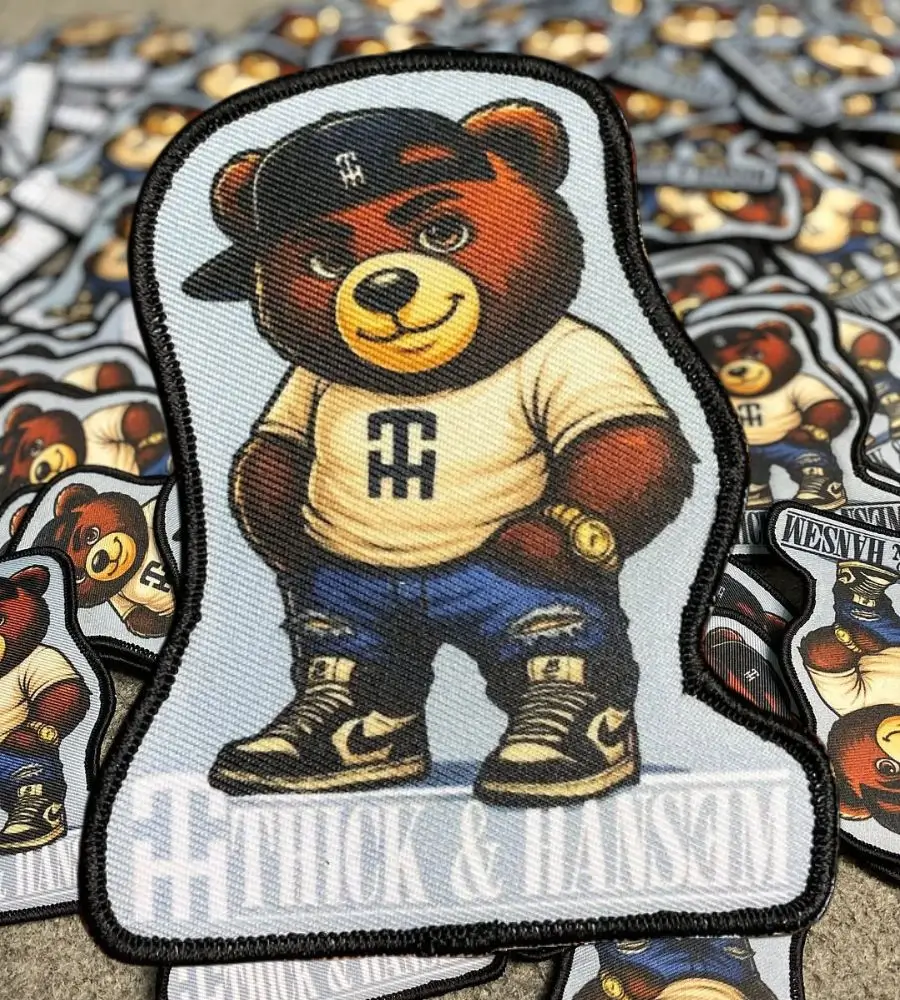
When Thread Can’t Do the Job, Ink Can.
Gradients. Shadows. Facial features. Tiny text. When your design looks like a photograph, don’t try to stitch it. Print it.
If you’re running a merch drop for a band in Silver Lake or need movie poster patches for a wrap party in Culver City, this is the solution. You get unlimited colors without paying for extra thread setup.
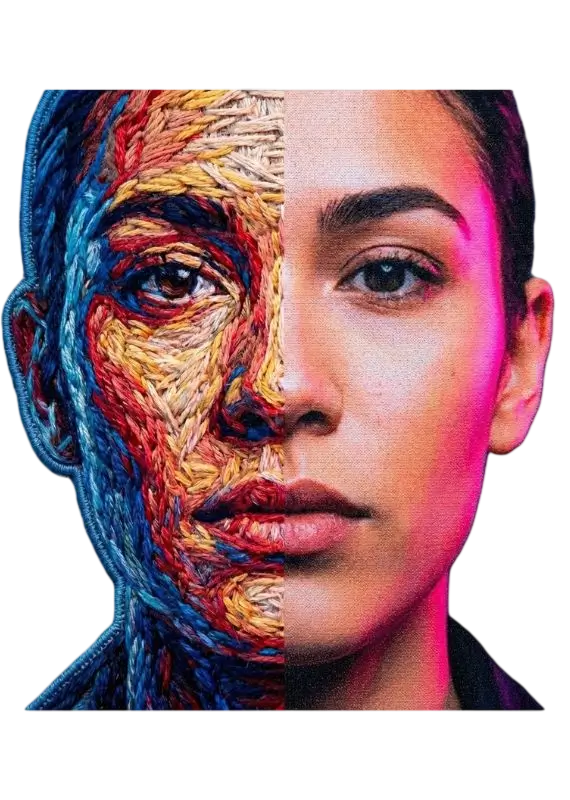
Printed vs. Embroidered: The Visual Difference
Here is why you pick print over stitch.
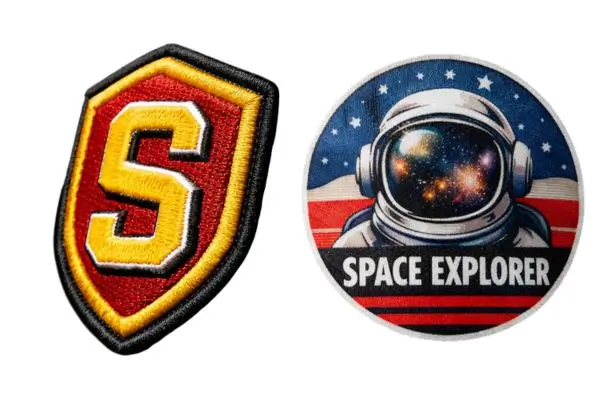
Resolution: 300 DPI vs. Thread Counts
Embroidery is low-resolution. It’s basically 8-bit art. Printing hits 300 DPI. We can replicate the brush strokes of a watercolor painting or the lens flare in a photo.
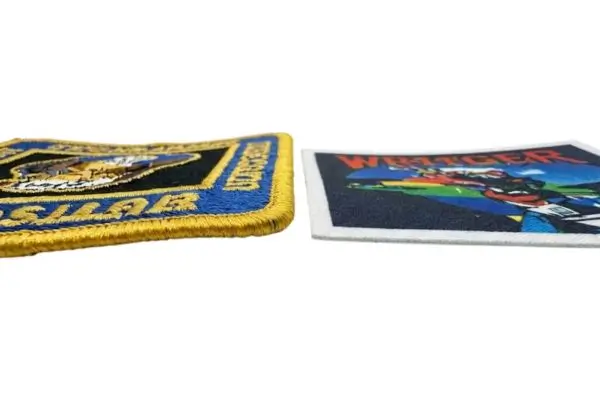
Texture: Smooth vs. Raised
Traditional 3D embroidery adds bulk and texture. Printed patches are flat and smooth. They feel like a tight polyester fabric and sit flush against a jacket or shirt.
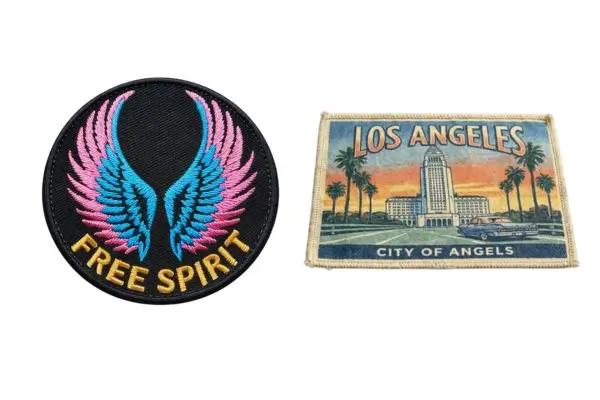
Color Blending: Gradients vs. Blocks
The thread is solid color. You can’t fade a red thread into a yellow thread seamlessly. Ink mixes perfectly. We can print skin tones, smoke, and fire that look real.
Types of Printed Patches
While most custom patch styles rely on thread, we have three ways to put ink on fabric.
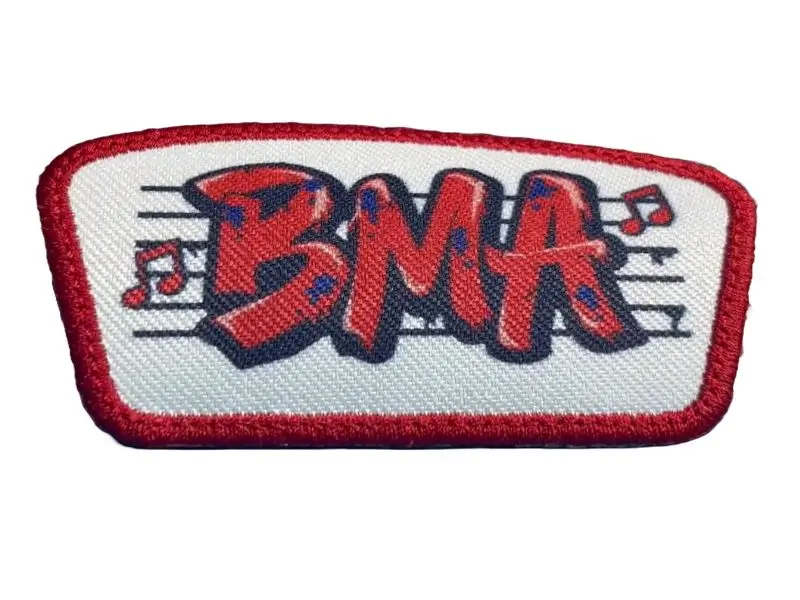
Dye Sublimation (The Standard)
This is science. We heat the ink until it turns into a gas. It penetrates the molecular structure of the white polyester twill.
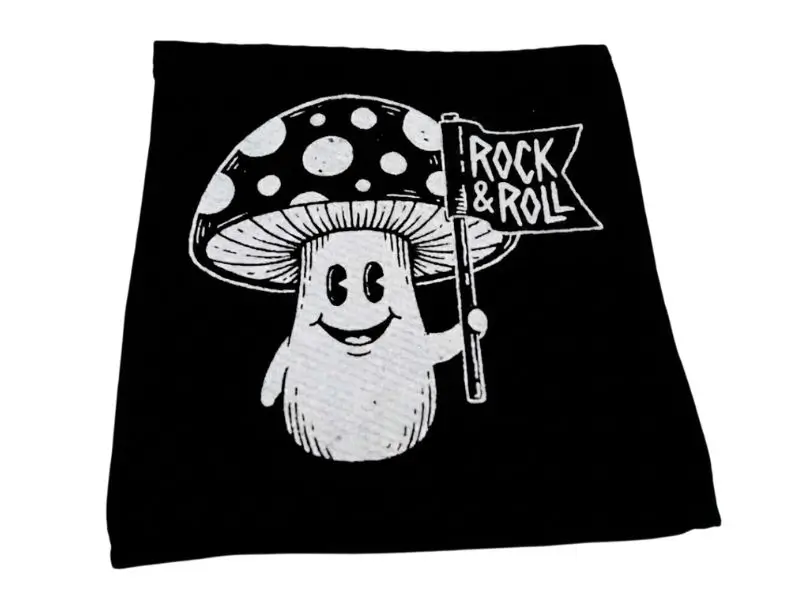
Screen Printed (The Bold Look)
We push thick plastisol ink through a mesh screen. The ink sits on top of the fabric.
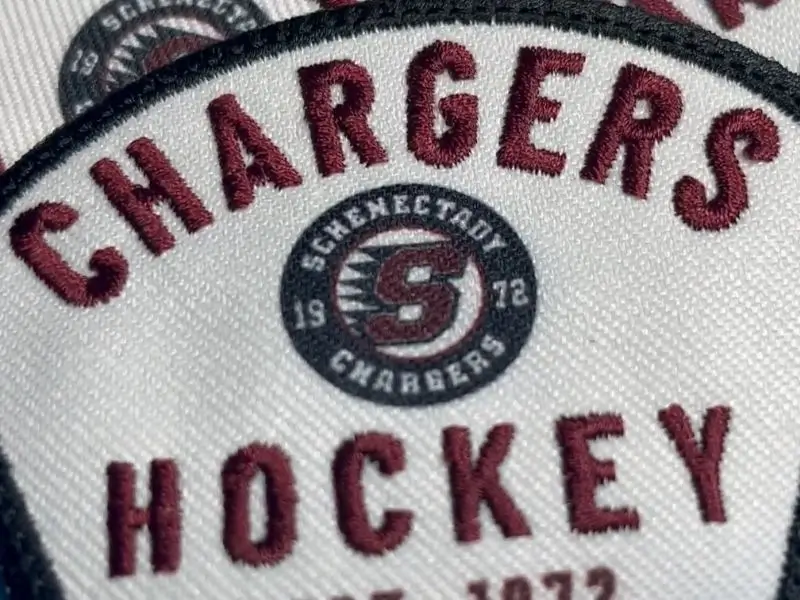
The “Hybrid” Patch (Best Seller)
We cheat. We sublimate the complex background (like a galaxy or a landscape) and then use the embroidery machine to stitch your logo text on top of it.
Popular Applications in Los Angeles
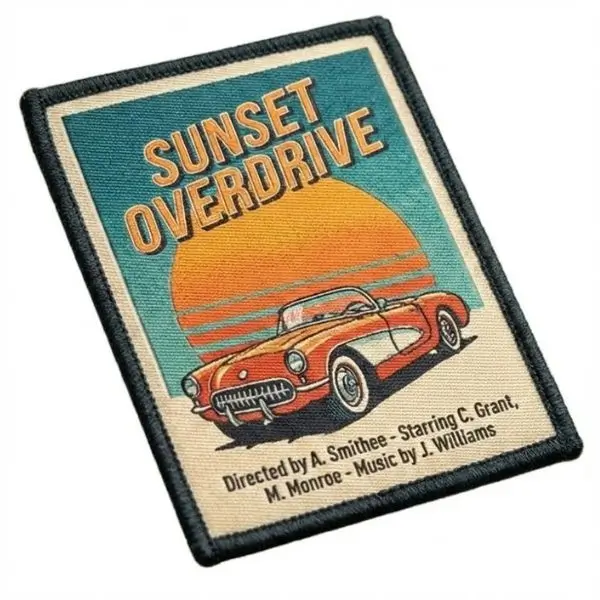
Film & TV Swag
Production crews love these. We take the actual movie poster art with all its complex lighting and credits- and shrink it down to a 3-inch patch. Thread can’t do that.
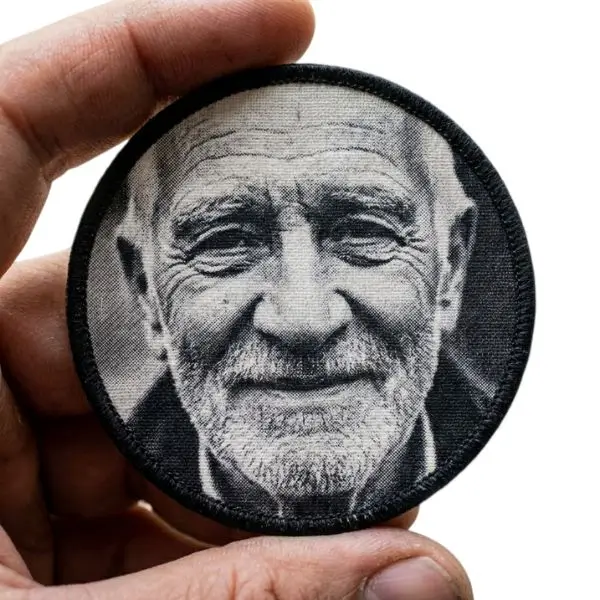
Memorial Patches
When a loved one passes, families often want a portrait patch. Sublimation allows us to print a photo of their face clearly. We treat these orders with respect and get the colors right.
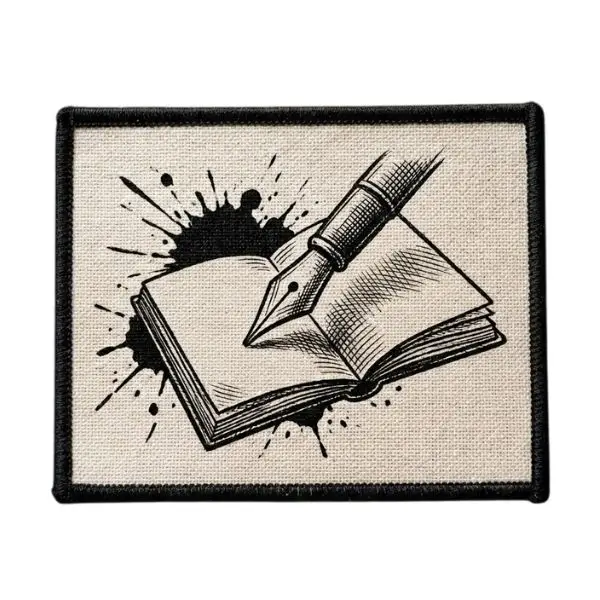
Artist Merch
If you sell art in the Arts District, you don’t want your line work distorted by a needle. Printing preserves your exact drawing style, ink splatters and all.
Edge & Border Options (Critical for Quality)
Listen to me: A printed patch without a border looks like a cheap sticker. You need to frame it.
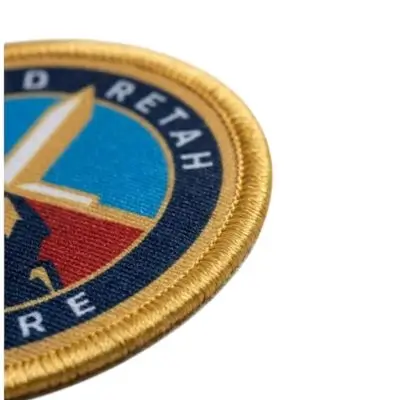
Merrowed Border (Recommended)
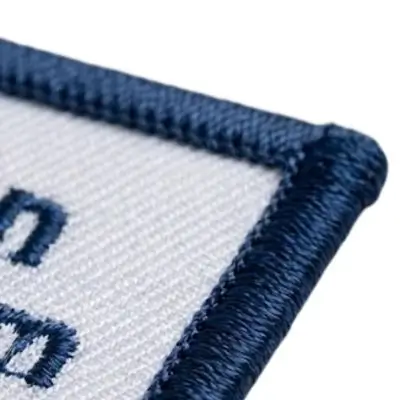
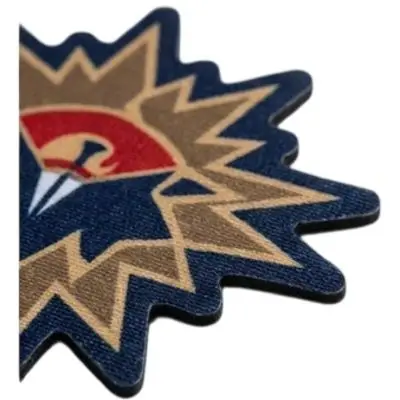
Laser Cut (Hot Cut)
Embroidered Overlay
Attachment Options
Choose the right backing for your application.
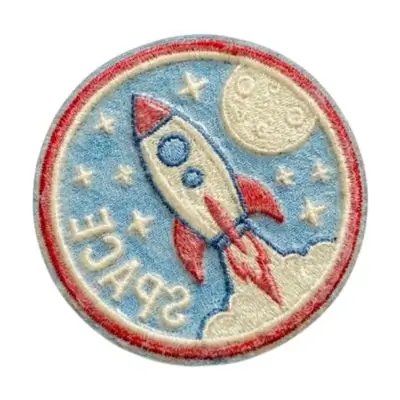
Iron-On (Heat Seal)
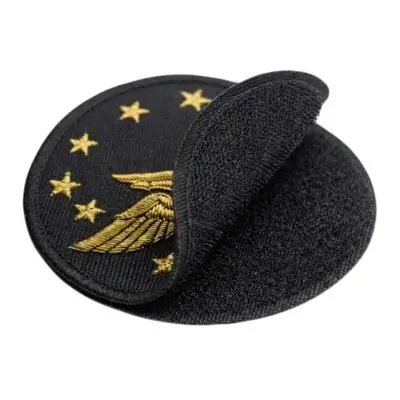
Velcro (Hook & Loop)
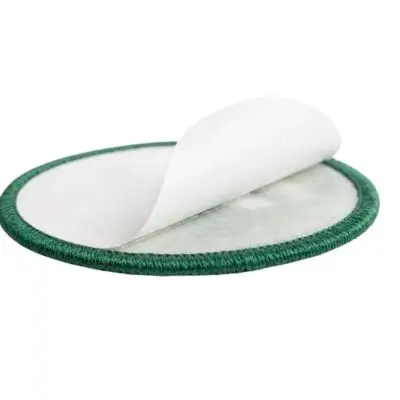
Peel & Stick (3M)
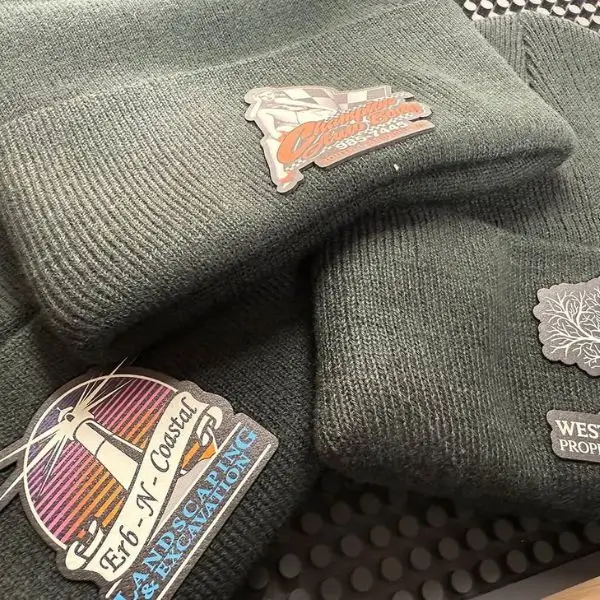
We Don’t Just Print Patches. We Build the Merch.
Running a merch drop for your band or film? We source premium tote bags, dad hats, and hoodies, and handle the heat-pressing in-house.
3-Step Order Process
-
1
Upload High-Res Art
Send us the best file you have.
-
2
Approve Layout Proof
We show you where the border will cut off the image.
-
3
Print, Cut & Ship
We fire up the heat press. Shipping to LA takes days, not weeks.
Get a Quote for Printed Patches
Don’t compromise your art. If it needs to look like a photo, print it.
Request Quote NowThe Technical Guide to Manufacturing Printed Patches
Printing isn’t magic; it’s chemistry, unlike embroidery, where we just push a button and the needle moves. Printing requires perfect source files and heat management. Here is what happens under the hood.
The Science: What is Dye Sublimation?
This isn’t an inkjet printer running over a piece of paper. Sublimation creates a molecular bond.
- We print your design onto special transfer paper using solid dye.
- We place that paper on the polyester patch twill.
- We clamp it in a heat press at 400°F.
At that temperature, the solid dye turns directly into a gas (that’s “sublimation”). The pores of the polyester fabric open up, and the gas rushes in. When it cools, the pores close, trapping the color inside the fiber. You can’t scratch it off because the color is now part of the fabric itself.
Art Requirements: The “Garbage In, Garbage Out” Rule
I’m going to be blunt because I want your patches to look good. I cannot fix a bad file.
Resolution Matters (300 DPI)
Embroidery is forgiving; printing is not. If you send a low-res JPEG you saved from a Google Image Search, your patch will look pixelated and blurry.
The Standard: We need 300 DPI (Dots Per Inch) at the actual size of the patch.
Vector is Best: .AI, .EPS, or .PDF files are preferred because they scale infinitely without losing quality.
CMYK vs. RGB Colors
- Your Screen (RGB): Uses Light (Red, Green, Blue) to create color. It can make neon, glowing colors.
- Our Printer (CMYK): Uses Ink (Cyan, Magenta, Yellow, Black). Ink cannot “glow.”
The “Resolution” Rule
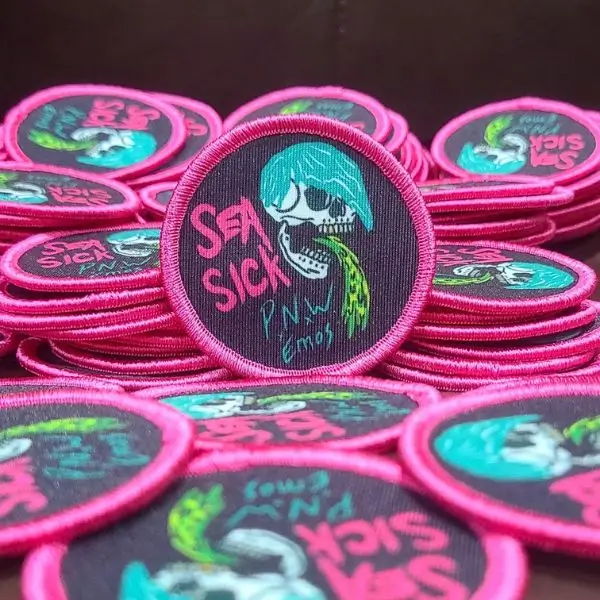
“I can’t print a miracle. If you send me a fuzzy, pixelated screenshot from Instagram, the patch is going to look fuzzy and pixelated. Garbage in, garbage out. Send me a vector file or a high-res photo (300 DPI).”
Durability & Washing Guide
It’s permanent. The only thing that kills sublimation is prolonged exposure to direct UV sunlight (like leaving it on a dashboard in the desert for 6 months). It will eventually fade.
Wash cold. Do not use bleach. Our sublimation inks are cured at 400°F and are California Prop 65 compliant, making them safe for daily wear.
Printed Patches vs. Woven Patches
Clients confuse these because they are both “flat.”
Made of threads woven together. It looks like “8-bit” pixel art. Limited to about 12 colors.
Ink on fabric. It looks like a “4K” photograph. Unlimited colors.
The Rule: If you need a photo of a dog, print it. If you need a crisp geometric logo, weave it.
Frequently Asked Questions (Printed)
Ink Capabilities
What is the difference between Printed Patches and Woven Patches?
Woven patches are made of fine threads woven together, which limits them to about 12 colors and gives a slightly ‘pixelated’ look up close. Printed patches use ink fused into fabric, allowing for unlimited colors, photo-realistic gradients, and 300 DPI resolution.
Can you print metallic gold or silver on a printed patch?
No. Metallic effects require physical reflection, and sublimation ink is matte. If your design requires real metallic shine, we recommend a ‘Hybrid Patch’ where we print the background and use metallic thread embroidery thread on top.
Ordering & Production
Is there a minimum order for printed patches?
Yes, our minimum order is 10 pieces. Setting up the print profile, calibrating the colors, and running the 400°F heat press takes time. We cannot produce just one patch cost-effectively.
Finishing Details
How do I wash a dye-sublimated printed patch?
Wash your garments in cold water. Do not use bleach, as harsh chemicals will erase the sublimated ink. Because the ink is molecularly bonded to the polyester fibers, it will not crack or peel in the dryer.
Will the white fabric edges show on my printed patch?
No. To prevent raw edges from showing, we highly recommend finishing your printed patch with a Merrowed Border. This thick overlock embroidery stitch wraps around the edge of the patch, providing a premium, framed look.