Merrowed vs. Heat Cut Borders: The Long Beach Mechanic’s Guide
The “Grease & Grime” Test: Why Edges Matter
At Los Angeles Patch Co., we know the first thing to fail on a cheap patch isn’t the logo—it’s the edge.
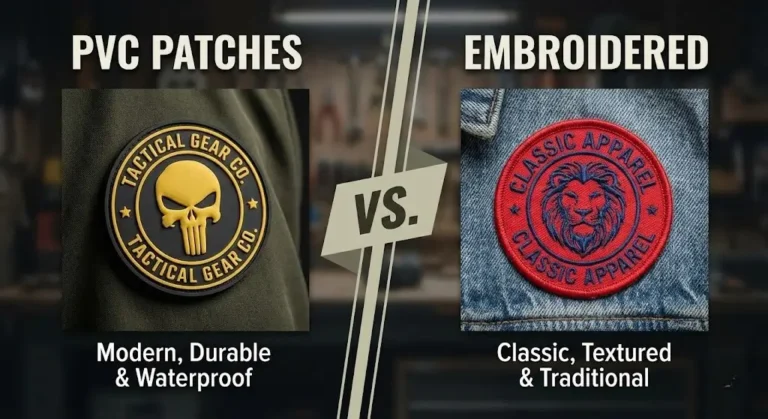
I see it all the time. A guy walks in with a patch that looks like a blooming onion. The layers are peeling apart. The white backing is showing. That happens because someone chose the wrong border for the job. You need to choose between armor (Merrowed) or precision (Heat Cut). However, if your gear is constantly exposed to hydraulic fluid, you might want to skip thread entirely and look into durable PVC patches which are naturally impervious to oil.
Option 1: The Merrowed Border (The Bulletproof Standard)
What is it? (The “Pipe” Edge)
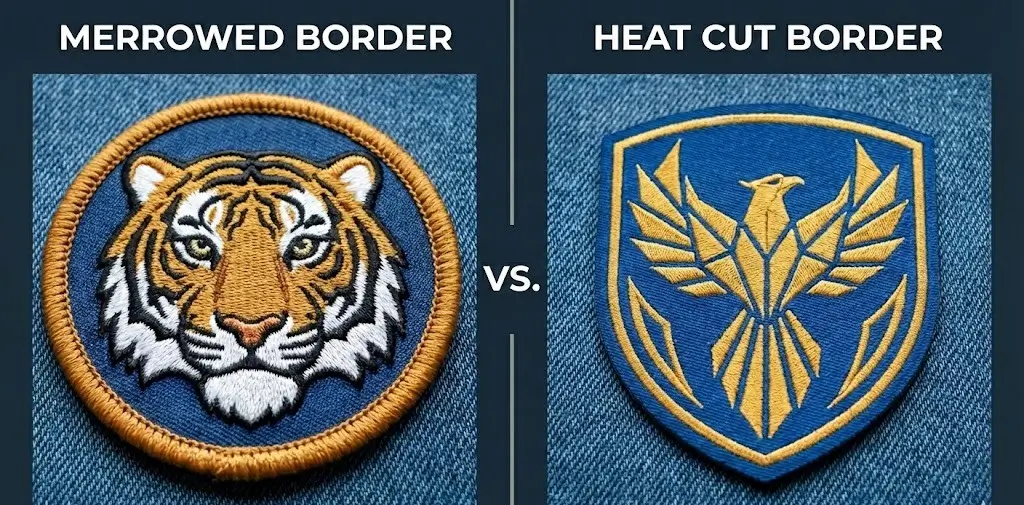
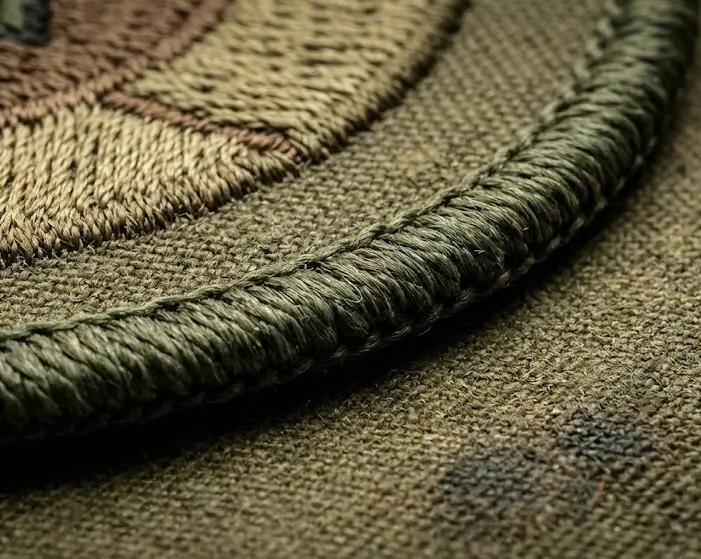
This is the classic look for the majority of our custom embroidered patches. We run a thick, heavy overlock stitch that wraps completely around the outer edge.
Why Mechanics Need It
It’s structural. The stitching mechanically locks the top fabric (twill) to the stiffener (buckram). It seals the sandwich.
Think of it as a bumper for your patch. When you scrape against a wall, the Merrowed border takes the hit, protecting the embroidery inside. It stops oil and grease from wicking into the side of the patch. It survives 100+ industrial wash cycles without fraying.
Option 2: The Heat Cut / Laser Cut (The “Custom Shape” Specialist)
What is it? (The “Sealed” Edge)
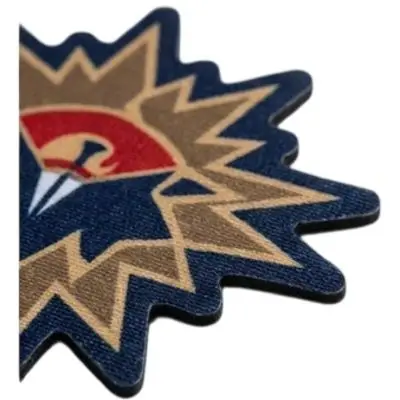
It’s flat. We use a hot knife or a high-powered laser to slice the patch out of the fabric roll. The heat melts the polyester edge instantly, cauterizing it to stop it from unraveling. There is no thick border stitching. The edge of the patch is the edge of the design.
When to Use It
Use this for “Floating” letters, complex jagged logos, or flame shapes. If your logo isn’t a standard circle or square, you must use Heat Cut. It allows for intricate, sharp angles that a Merrow machine simply can’t handle.
| Feature | Merrowed Border | Heat / Laser Cut |
|---|---|---|
| Durability | High (The “Tank” option) | Medium (Can crack over time) |
| Shape Flexibility | Low (Circles/Squares only) | High (Any custom shape) |
| Feel | Soft, thick edge | Sharp, thin edge |
| Cost | Slightly higher (Separate machine) | Standard (Included) |
| Best For | Uniforms, Workwear, Hats | intricate Logos, Fashion |
Get a Quote (We’ll Fix Your Borders)
Send us your art. If you don’t specify the border, we’ll check the shape. If it’s a circle, we Merrow it. If it’s crazy, we Laser it.
Get A QuoteThe Technical Guide to Patch Edging
Most people think the border is just a colored line around the artwork. It’s not. It’s the structural integrity of the entire patch.
The Mechanics of the Merrow Machine
We use a specific machine for this: the Merrow MG-3U. It’s the industry standard for a reason.
It doesn’t just stitch “on” the patch. It executes a 3-thread overlock stitch. The needle pierces the fabric while two loopers wrap heavy-duty thread completely around the raw edge of the patch.
The Physics of Laser Cauterization (Heat Cut)
Heat cutting is chemistry. Patch fabric is Polyester. Polyester is plastic.
When we use a laser or a hot knife to cut out a custom shape (like a flame or a skull), we aren’t just cutting; we are melting. The heat cauterizes the edge, turning the frayed fibers into a hard, microscopic bead of solid plastic.
The “Overlock” Advantage for Sew-On Patches
Ask your seamstress which one she prefers. She’ll say Merrowed every time.
The thick, raised border gives the sewing machine foot a “track” to follow. You can bury the stitch inside the border so it’s invisible. It’s forgiving.
You have to stitch dangerously close to the edge. If you stitch too close, the needle perforates the cauterized seal, and the patch rips right off the jacket. There is no room for error.
Frequently Asked Questions (Borders)
Can I Merrow a star shape on a custom patch?
No. The Merrow machine is fast and heavy. It cannot pivot 180 degrees to get inside the sharp “V” points of a star. It will bunch up and break the needle. Stars, shields with sharp indents, and complex logos must be Heat Cut.
Which patch border is cheaper: Merrowed or Heat Cut
Heat Cut is generally more cost-effective because it happens automatically during the laser cutting process. Merrowed borders require a separate manual step where a human operator feeds each patch through an overlock machine, which slightly increases the labor cost.
Can I have a Merrowed border on a Woven Patch?
Yes! This is the best manufacturing hack we have.
Yes! This is the best manufacturing hack we have. We often apply this heavy frame to our high-definition woven patches to give them the weight of an embroidered crest while keeping the micro-detail in the center.