PVC Patches vs. Embroidered: The California Security Standard
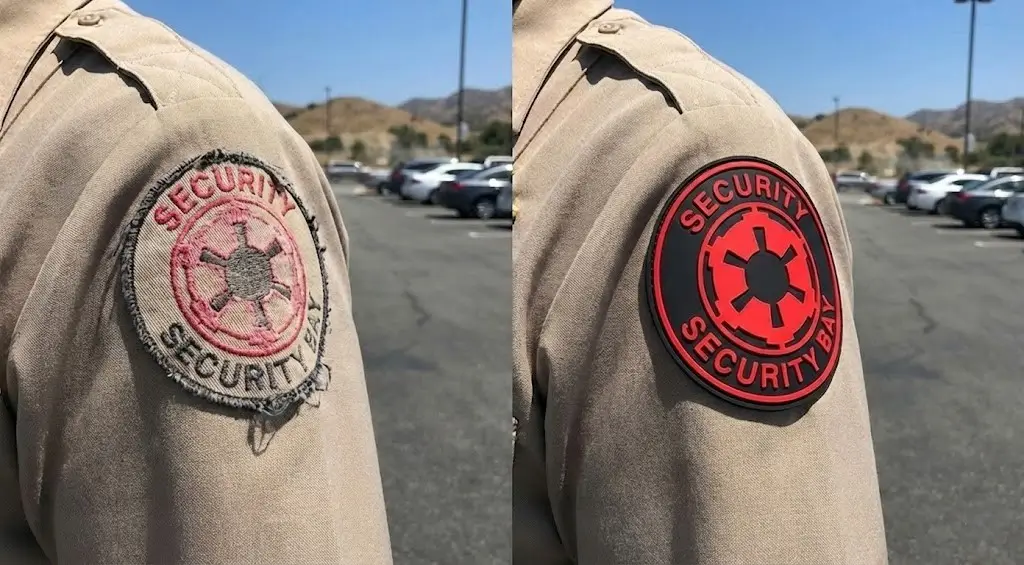
If the patch is fraying, faded, or curling up at the edges, it’s embroidered. It looks tired. If the patch is crisp, matte, and readable from 50 feet away, it’s PVC.
For decades, embroidery was the default. But in Los Angeles, the industry has shifted. At Los Angeles Patch Co., a dedicated local patch manufacturer, we know that if you run a security detail, you aren’t just selling safety; you’re selling authority. And nothing kills authority faster than a sloppy uniform.
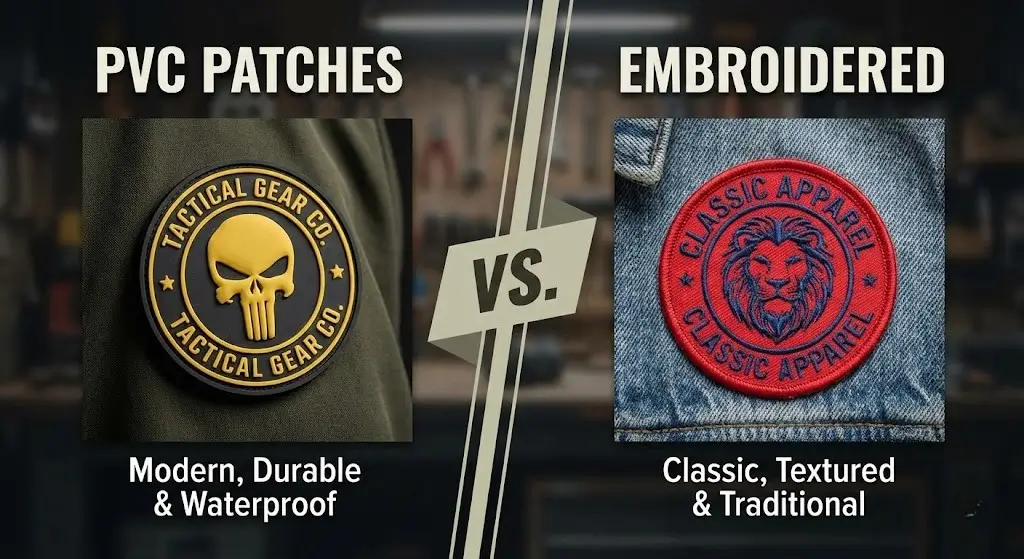
The “12-Hour Shift” Test: Why LA Firms Are Switching to PVC
Here is the reality of the job. Your guards are working 12-hour shifts. They are getting in and out of patrol cars, rubbing against door frames, and standing in the sun.
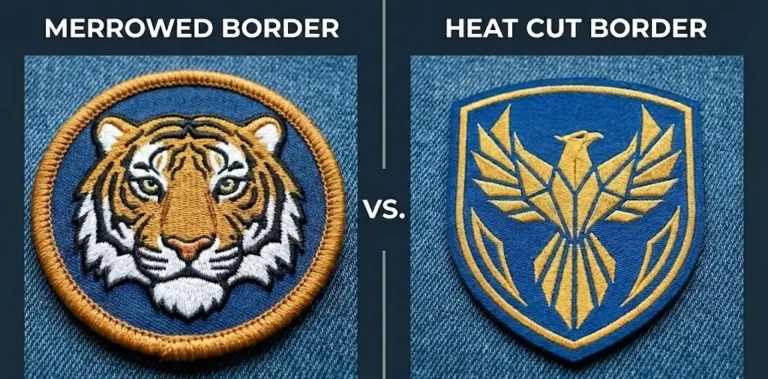
After three months of heavy use, the borders start to fuzz up. Understanding Merrowed vs. Heat Cut borders explains why thread edges fail under friction while molded rubber edges stay sharp forever.
It’s armored. You can scrape it against a stucco wall, and it won’t care.
- Field Duty / Patrol: Go for durable custom PVC patches. It’s built for abuse.
- Class A / Dress Uniforms: Stick with traditional embroidered patches. It looks better on a blazer or a button-down shirt where tradition matters more than durability.
Factor 1: The “Tactical” Look (Authority & Readability)
Visual psychology matters. When a civilian sees a uniform, they make a judgment in a split second.
“Mall Cop” vs. “Special Ops”
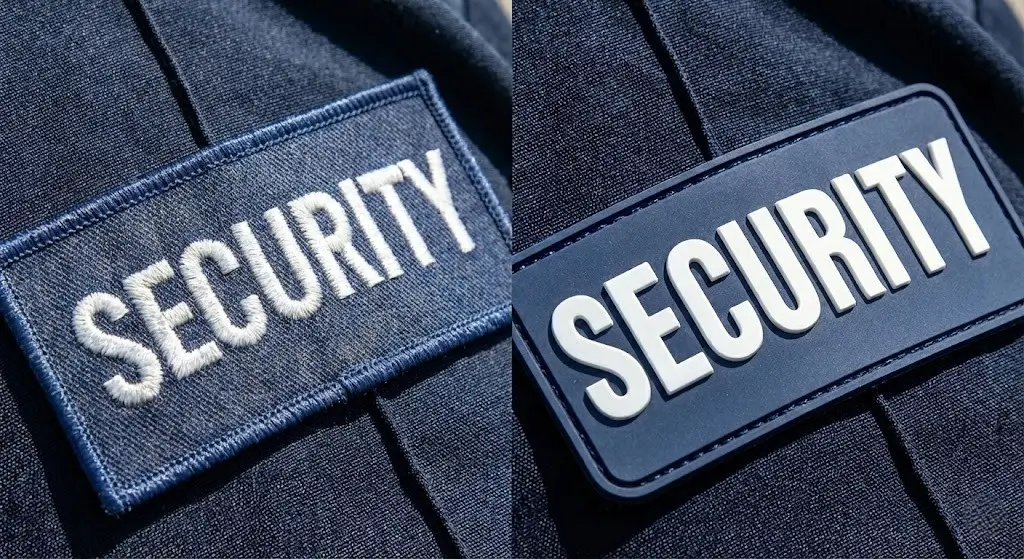
Embroidery feels “soft.” It reminds people of Boy Scouts or old-school mall security. It doesn’t scare anyone.
PVC feels “hard.” It’s the standard issue for SWAT teams, Military units, and Federal agencies. When you switch your team to matte black or coyote tan PVC, you instantly upgrade their public perception. It looks technical. It looks expensive.
Legibility at a Distance
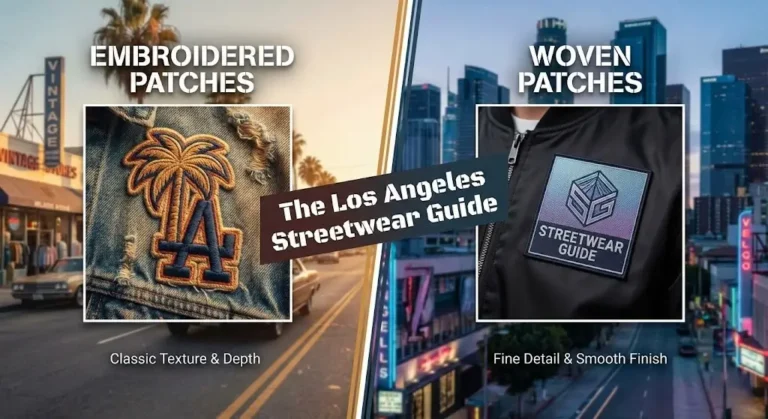
Embroidery has limits. The thread has volume and fuzz. If you have tiny text that requires absolute sharpness but you don’t want rubber, high-definition woven patches are the lightweight alternative for crisp lettering.
PVC is molded. We cut the metal mold with a CNC machine. The edges of the letters are 90-degree cliffs. Shadows hit them perfectly. You can read a PVC patch from twice the distance of a threaded one.
Factor 2: Surviving the Los Angeles Environment
We live in a desert. The environment here destroys textiles.
UV Resistance (The Parking Lot Factor)
If your guys are patrolling a parking lot in the San Fernando Valley in July, standard polyester thread doesn’t stand a chance. The UV rays cook the dye. Red thread turns pink. Black thread turns charcoal grey.
PVC is UV-stabilized. It’s essentially melted plastic. That black background stays pitch black for 5+ years, even in direct sunlight.
Waterproof & Sanitizable (The Hygiene Factor)
This is the gross part, but we need to talk about it. Embroidery is a sponge. It absorbs sweat, rain, coffee spills, and worse. You can wash the shirt, but the patch holds onto odors and stains.
PVC is hydrophobic. It hates water. If a guard spills coffee on their patch, they can wipe it off with a napkin. If they get blood on it, they can hit it with a Clorox wipe. It sanitizes instantly.
Factor 3: Cost & Durability Analysis
I won’t lie to you, rubber costs more upfront.
Setup Costs: Digitizing vs. Molds
Embroidery: Cheap setup. We just make a digital file.
PVC: Expensive setup. We have to mill a physical block of aluminum for your mold. That setup fee usually runs $50-$100.
The “Cost Per Wear” Equation
An embroidered patch on a field uniform looks trashy after 6 months. You have to replace it.
A PVC patch will outlast the shirt it’s sewn on. It lasts 5 years. You buy it once. Over the life of a contract, PVC is cheaper.
Technical Guide: Manufacturing Differences
Stop thinking about these as “patches.” Think of them as flexible manufactured parts.
Embroidery is a textile work. PVC is engineering. Here is exactly what happens on the factory floor when we make your security patches.
How They Are Made (Needle vs. Injection)
We take a piece of polyester twill (the base) and drive a needle through it thousands of times. It creates a “fabric sandwich.”
The Flaw: Because it’s made of thousands of individual loops, it can snag. If a guard brushes against a brick wall or a chain-link fence, the thread pulls. Once one loop breaks, the design starts to unravel.
We mill a negative of your design into a block of metal. Then, we inject liquid colored vinyl into the cavity. We bake it until it cures into a single, solid piece of rubber.
The Fix: There are no layers to separate. It’s one solid unit. You could cut a PVC patch in half with scissors, and the edge still wouldn’t fray.
Material Science: Hydrophobic vs. Hydrophilic
This matters when you’re working a rainy night shift or sweating in a vest.
Standard embroidery thread absorbs moisture. When it gets wet, it gets heavy. It sags. It smells like a wet dog if it doesn’t dry out properly.
Liquid beads up and rolls off. It does not absorb moisture. Our rubber formulas are California safety compliant and sanitizer-safe, making them ideal for hygiene-sensitive environments.
Velcro Adhesion Mechanics
A common worry I hear from directors is: “PVC is too heavy. It will rip the Velcro off.”
That only happens if you buy cheap patches.
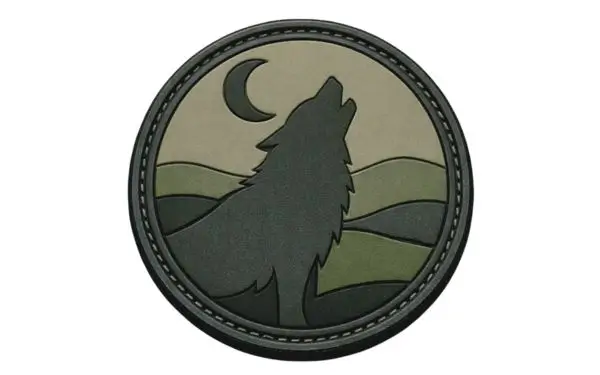
We engineer a Recessed Sewing Channel into the mold. This is a thin, flat gutter around the edge of the patch. It allows us to sew the Velcro hook backing onto the rubber using a heavy-duty box stitch. The thread sits flush inside the groove, so it doesn’t rub against the vest. It’s not coming off unless you cut it off.
Design Constraints (When to Stick with Embroidery)
PVC isn’t magic. It has limits.
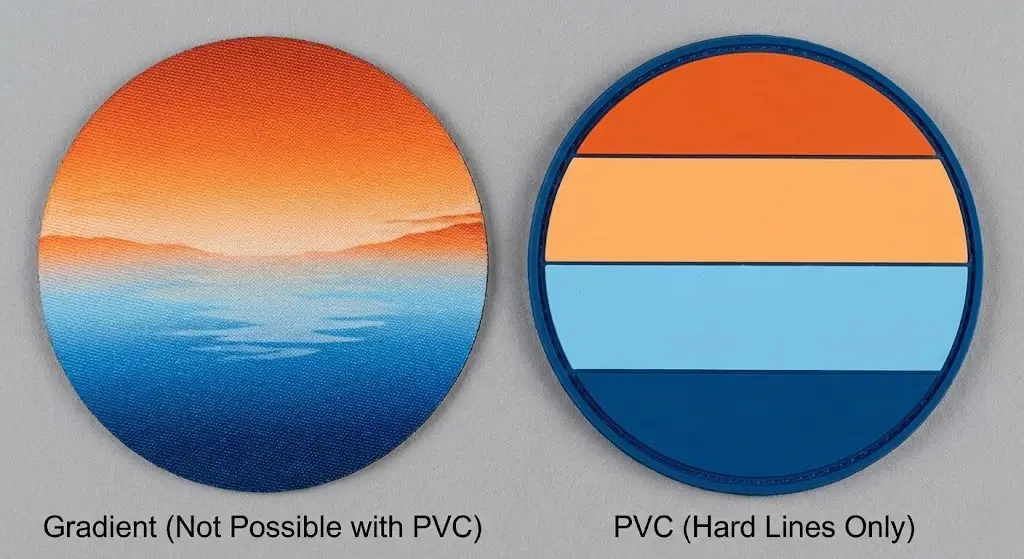
It cannot do gradients.
Liquid rubber is like paint. It’s a solid color. We can’t fade a sunset from orange to blue. We have to make a hard line between the colors.
If your security firm’s logo has complex shading, fading shadows, or photographic details, we have to use Embroidery (or Printed patches for photo-realism). PVC works best for bold, high-contrast, “SWAT-style” lettering.
Frequently Asked Questions
Can I put PVC patches on a dress blazer?
No. PVC has a matte, tactical look that clashes with the formal wool fabric of a suit. For Class A uniforms, funerals, or concierge roles, we recommend traditional gold bullion or direct embroidery. Save PVC for tactical vests, polo shirts, and field jackets.
Are custom PVC patches heat-resistant?
Yes, up to about 140°F. Standard PVC holds up fine in the LA heat. However, if you leave it on the dashboard of a patrol car in the middle of August with the windows up, it might warp. If you need extreme heat resistance (firefighters), ask us for Silicone. It costs more, but it won’t melt.
Can you match my company’s Pantone colors with PVC?
Yes. We mix the liquid rubber pigment by hand in the shop. If your brand is “PMS 286 Blue,” we match it exactly. Unlike thread (where we have to pick the closest spool), rubber can be mixed to any shade.